
The
European adder
Adder Fact File
- Common name – adder
- Scientific name – Vipera berus berus
- Size – males rarely exceed 60cm in length. Females grow larger than males, up to 80cm.
- Identification tips – adders have very distinctive ‘zig-zag’ patterns that run the entire length of the body, on the back and sides. This is commonly a dark grey colour, over a light brown or tan body.
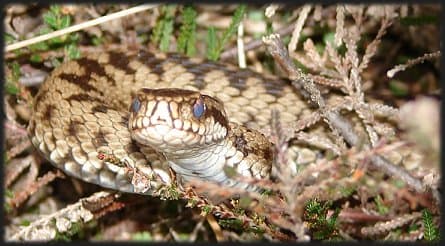
- Preferred habitat – woodland and shrub, anywhere where there is an abundant supply of food. Adders will bask in the sunshine in open areas, but never too far away from cover.
- Diet – small rodents, lizards, nestlings and amphibians such as frogs and newts.
- Breeding – the mating month is May, and the pregnant females give birth to between 5 and 25 adders in August/September. A typical nesting place is under a fallen tree stump or any well protected hollow.
- Other points – adders are Britain’s only venomous snake. While the venom itself is extremely strong, the small quantity injected into the victim greatly limits the effect – particularly in larger animals.
Adders are spread throughout the New Forest and surrounding countryside but, like any snake, they are very elusive. The best place to look for adders is along New Forest pathways and tracks on warm days.
If a bite is received from an adder, medical advice needs to be sought promptly. It’s worth noting that most bites to humans (around 100 per year for the whole of the UK) happen when the person is attempting to pick the adder up. Probably best not to try that!
New Forest Adder Video
The video here is of an adder encountered while out in the New Forest early in 2007, by myself. Probably not long out of hibernation, and on a cold March morning, the adder refused to run for cover as most adders so when disturbed, but instead stood strong, twice striking out at the camera! Beware, they can be aggressive!
Table of Contents
Toggle