The
The Badger
Common name - badger (Eurasian badger is the UK species)
Scientific name - meles meles
Size - Boars (males) average between 70 - 90 cm in length and around 8 - 12 kg in weight. Sows (females) are generally smaller but the difference is sometimes negligible.
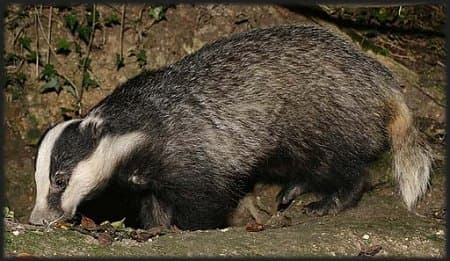
Identification tips - readily identified by its size, stocky shape and distinctive black and white markings on the head; the head is primarily white with two broad black stripes running from behind the ears, over the eyes, and stopping just short of the nose.
Coat colour is normally a silver-grey but can also be a very dark brown.
Preferred habitat - badgers live in setts, a system of underground tunnels and small chambers. Badger setts vary in size and may be used by many different generations if the area is safe, or new setts may be dug if an old one is threatened.
The setts are typically found in, or on the edge of, wooded areas.
Diet - a badger's main food is the earthworm, 200 or more may be consumed in a day if the ground is damp and the worms are easily found. While this is the preferred food, badgers are not fussy eaters and in addition will readily consume other small invertebrates, frogs, birds eggs, insects, larvae, nuts, berries, acorns and many types of plant shoots.
Breeding - there is no fixed breeding season for badgers, they can breed at any time of the year. Delayed implantation means the development of any fertilised eggs is suspended until an environmental factor triggers the fertilised eggs to be implanted into the uterus and continue normal growth. Irrelevant of when mating took place, this implantation almost always occurs around December.
The badger cubs are born 6 - 8 weeks later, February being the main month for giving birth. A litter of cubs can be up to 6 in number but 3 or 4 is more common.
Other points - badgers are found throughout the New Forest but are not great in number. The best time to watch for badgers is at dawn or dusk when they emerge from their sett to forage for food. Badgers move quite quickly and tend to stay on traditional pathways around the sett.
While aggressive between themselves, they are shy animals and will quickly retreat underground if spooked.