
Grey Squirrel Fact File

The

Grey Squirrel Fact File
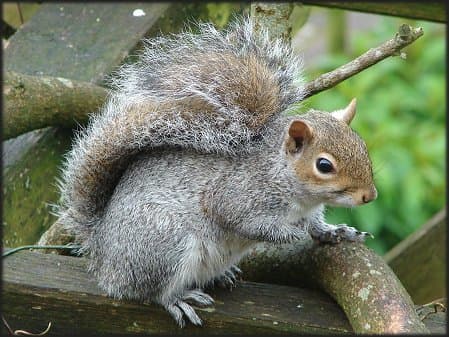

The Grey Squirrel

  • Common name – grey squirrel
  • Scientific name – Sciurus carolinensis
  • Size – body length of approximately 25cm, with an additional tail length of around 20cm

Identification tips – body colour grey with a much paler, sometimes white, chest. The back often shows a gingery-brown patch and sometimes this extends down the sides of the body. The bushy tail can be a mixture of grey, gingery-brown and black.
The sides of the face are often a browny colour rather than grey, and the eyes are black.

Preferred habitat – Grey squirrels are tree dwellers, so woodlands of all types. They will readily approach gardens of houses close to wooded areas, looking for food.

Diet – nuts, acorns, berries and fruits from trees, fresh plant shoots and buds. Bird eggs are taken where possible, as are baby birds, from the nests.

Breeding – female grey squirrels give birth twice a year to litters of between 3 and 7 kittens. They nest in ‘dreys’, football-sized nests made from small twigs and branches high up in the tree.

Other points – Grey squirrels are widespread and are easily seen during a walk through the wooded areas of the New Forest. The easiest place to spot them is around the base of trees. When disturbed, they move quickly and will disappear into the tree canopy, never staying still for very long.
They can often be heard – a short, sharp ‘clicking’ sound is the most common noise that a grey squirrel makes.
Grey squirrels are seen as pests by many, and are culled by the Forestry Commission because of the damage that they can do to tree bark and the natural wildlife eg taking bird’s eggs or chicks from nests.

Why Egypt Changes You

Why Egypt Changes You

The Kind of Journey You Don’t Expect Most trips start the same way. You plan, you pack, you imagine what it’s going to feel like when you finally get there. Maybe you’re chasing good weather,
Read More »
Keep New Forest Water Clean

Keep New Forest Water Clean

The New Forest National Park is home to some of the UK’s most valuable freshwater habitats, from rare headwater streams to seasonal ponds that appear and disappear with the rainfall. Despite its protected status, these
Read More »
Understanding Firearm Policies in and Around National Parks

Understanding Firearm Policies

Yes, a person can legally carry a firearm in national parks, but the rule is narrower than it sounds. Firearm policies in and around national parks start with a 2010 change in federal law. That

Read More »
A Guide to Trails and Park Terrain

A Guide to Trails and Park Terrain

There is a specific smell that hits you the moment you step out of the car in the New Forest. It is a mix of damp oak leaves, ancient soil, and honestly, a little bit

Read More »
New Forest Activities for Single-Parent Families

New Forest Activities for Single-Parent Families

The New Forest offers a wealth of year-round experiences perfect for single-parent families looking to create lasting memories. From spring woodland walks surrounded by bluebells to summer picnics by gentle streams, the national park provides

Read More »
Practical Equipment for Life on the Road

Practical Equipment for Life on the Road

More people choose mobile living every year, from weekend caravanners to full-time digital nomads. Homes on wheels promise freedom, changing scenery, and a lifestyle that breaks away from traditional routines. That lifestyle only feels comfortable

Read More »
Back to top button